freeman4u16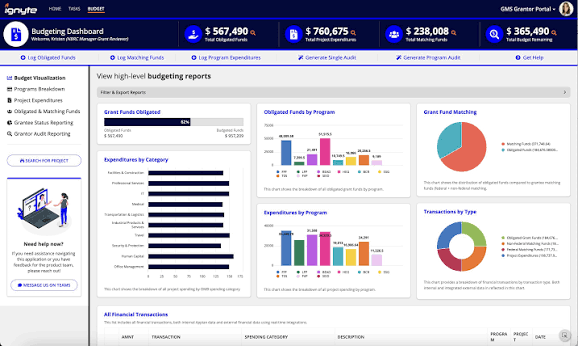
Grant tracking software has become an essential tool for nonprofits, universities, government agencies, healthcare institutions, and research organizations that rely on grant funding to sustain their operations and programs. Managing grants manually through spreadsheets and email threads is time-consuming, error-prone, and difficult to scale as an organization grows or takes on multiple funding sources at once. Grant tracking software addresses these challenges by centralizing every stage of the grant lifecycle, from prospect research and application through award management, budget tracking, and final reporting, into a single, organized system.
As competition for funding intensifies and funders demand greater transparency and accountability, organizations that rely on outdated or fragmented tracking methods risk missed deadlines, compliance violations, and lost funding opportunities. Grant tracking software offers a modern solution by automating repetitive tasks, providing real-time visibility into grant status, and ensuring that teams stay aligned throughout what is often a long and complex process.
What Is Grant Tracking Software?
Grant tracking software is a specialized application designed to help organizations manage the full lifecycle of grants they pursue or administer. This includes identifying potential funding opportunities, organizing application materials, tracking submission deadlines, monitoring award status, managing budgets and expenditures, and generating the reports funders require. Some platforms are built specifically for grant seekers, such as nonprofits applying for foundation or government funding, while others are designed for grantmakers, such as foundations that need to manage applications, disbursements, and compliance across many grantee organizations.
At its core, this type of software functions as a centralized database and workflow engine. Rather than storing grant information across disconnected spreadsheets, shared drives, and email inboxes, all stakeholders can access a single source of truth. This is particularly valuable for organizations with multiple staff members or departments involved in the grant process, since it reduces duplicated effort and miscommunication.
Core Features of Grant Tracking Software
While specific tools vary in scope and design, most grant tracking platforms share a common set of core capabilities that support organizations throughout the grant lifecycle:
- Opportunity research and discovery — searchable databases of grants matched to an organization’s mission, size, and eligibility criteria
- Application and proposal management — templates, document storage, and collaborative editing tools for building grant applications
- Deadline and task tracking — calendars, reminders, and automated alerts to prevent missed submission windows
- Budget and financial tracking — tools to monitor spending against awarded amounts and flag potential overspending
- Reporting and compliance — automated generation of progress reports, financial reports, and other funder-required documentation
- Collaboration tools — shared workspaces, task assignments, and comment threads that keep grant teams coordinated
- Dashboards and analytics — visual summaries of pipeline status, award totals, success rates, and upcoming deadlines
- Document storage — centralized repositories for contracts, award letters, budgets, and supporting materials
Together, these features reduce the administrative burden associated with grant management and free up staff time to focus on programmatic work rather than paperwork.
Why Organizations Need Grant Tracking Software
For many organizations, grants represent a significant portion of annual revenue, and the stakes of managing them poorly can be high. Missing a reporting deadline can jeopardize future funding relationships, while losing track of budget allocations can result in noncompliance and the obligation to return funds. Grant tracking software mitigates these risks by providing structure and accountability throughout the process.
Beyond risk mitigation, grant tracking software also supports strategic growth. Organizations that can clearly see their grant pipeline, success rates, and funding trends are better positioned to make informed decisions about where to focus their fundraising efforts. Historical data captured within the software, such as which funders have supported similar projects in the past or which proposal language has been most successful, can inform future applications and improve win rates over time.
Grant tracking software is also valuable for demonstrating accountability to boards, auditors, and funders themselves. Many funders now expect real-time or near-real-time visibility into how their funds are being used, and software that can generate accurate, up-to-date reports on demand helps build funder trust and can strengthen long-term relationships.
Key Benefits
- Time savings — automation of repetitive administrative tasks such as deadline reminders and report generation
- Reduced errors — centralized data reduces the risk of duplicate entries, missed steps, or inconsistent figures across documents
- Improved collaboration — shared visibility allows program staff, finance teams, and leadership to stay aligned
- Stronger compliance — built-in checklists and reporting templates help ensure funder requirements are consistently met
- Better decision-making — dashboards and analytics provide insight into pipeline health and funding trends
- Scalability — as an organization grows or takes on more grants, the software can handle increased volume without a proportional increase in administrative staff
These benefits compound over time. An organization that adopts grant tracking software early often finds that its grant-seeking capacity grows faster than its administrative overhead, since much of the manual coordination work is absorbed by the system itself.
Types of Organizations That Use Grant Tracking Software
Grant tracking software is used across a wide range of sectors, each with somewhat different needs:
- Nonprofits — tracking multiple funding sources, managing proposal deadlines, and reporting outcomes to foundations and government funders
- Higher education institutions — managing research grants, tracking principal investigators, and ensuring compliance with federal funding regulations
- Government agencies — administering grant programs to external recipients, monitoring disbursements, and enforcing compliance requirements
- Healthcare and research organizations — coordinating grant-funded research projects, tracking budgets across multiple funding cycles, and managing regulatory reporting
- Foundations and grantmakers — managing inbound applications, review workflows, and disbursement schedules across a portfolio of grantees
While the underlying workflow, tracking opportunities, applications, awards, and reports, is broadly similar across these sectors, the specific compliance requirements and reporting formats can vary significantly, which is why many platforms offer sector-specific templates and configurations.
Choosing the Right Grant Tracking Software
Selecting the right platform depends heavily on an organization’s size, budget, and the complexity of its grant portfolio. Smaller organizations managing a handful of grants each year may find that a simpler, more affordable tool meets their needs, while larger institutions managing dozens or hundreds of grants across multiple departments often require more robust, enterprise-level systems with advanced permissions, integrations, and reporting capabilities.
When evaluating options, organizations should consider several key factors. Ease of use is critical, since a powerful tool that staff find confusing or cumbersome will see limited adoption. Integration capabilities matter as well; software that connects with existing accounting systems, customer relationship management platforms, or document storage tools can significantly reduce duplicate data entry. Scalability is another important consideration, particularly for growing organizations that expect their grant volume to increase over time.
Cost structures vary widely across the market, from free or low-cost tools designed for small nonprofits to enterprise platforms with substantial licensing fees. Organizations should weigh the cost of the software against the time savings and risk reduction it provides, keeping in mind that the cost of a missed deadline or compliance failure can far exceed the price of a subscription. Finally, customer support and training resources should factor into the decision, since successful adoption often depends on how well a vendor supports onboarding and ongoing use.
Implementation Best Practices
Successfully adopting grant tracking software requires more than simply purchasing a license. Organizations should begin by mapping their existing grant management workflow so that the software can be configured to match how the team actually works, rather than forcing staff to adapt to a rigid, out-of-the-box structure. Involving key stakeholders, such as program staff, finance teams, and leadership, early in the selection and implementation process helps ensure the tool meets everyone’s needs and increases buy-in.
- Migrate historical grant data carefully to preserve institutional knowledge and reporting history
- Establish clear naming conventions and data entry standards to keep the system consistent as more users are added
- Provide adequate training so staff feel confident using the software’s full range of features
- Set up automated reminders and workflows early so deadlines are never missed during the transition period
- Periodically review and refine configurations as the organization’s grant portfolio evolves
Organizations that invest time in a thoughtful rollout typically see faster adoption and a stronger return on their investment than those that treat implementation as an afterthought.
Common Challenges and How to Address Them
Despite its benefits, adopting grant tracking software is not without challenges. Staff resistance to changing established habits is common, particularly in organizations where spreadsheets and manual processes have been used for years. Overcoming this resistance often requires clear communication about the benefits of the new system, along with hands-on training and ongoing support during the transition.
Data migration can also be difficult, especially for organizations with years of historical grant records scattered across multiple formats and systems. Taking the time to clean and organize data before migration, rather than importing everything as-is, can prevent long-term data quality issues. Additionally, organizations sometimes underestimate the ongoing effort required to maintain the system, such as keeping records updated and ensuring new staff are properly trained. Assigning clear ownership of the system, whether to a single grants manager or a dedicated team, helps ensure it remains accurate and useful over time.
The Future of Grant Tracking Software
As artificial intelligence and automation technologies continue to advance, grant tracking software is evolving to offer increasingly sophisticated capabilities. Many platforms now incorporate features such as automated opportunity matching, which uses an organization’s profile and past funding history to surface relevant new grants, and natural language tools that assist with drafting or refining proposal narratives. Predictive analytics are also becoming more common, helping organizations estimate their likelihood of success for a given opportunity based on historical data.
As these tools mature, the line between grant tracking software and broader fundraising or research management platforms is likely to blur further, with more organizations seeking integrated systems that manage not just grants but the full spectrum of institutional funding relationships. Organizations that stay attentive to these developments and periodically reassess their tools will be better positioned to take advantage of new efficiencies as they emerge.
Conclusion
Grant tracking software has moved from a nice-to-have convenience to a near-essential tool for organizations that depend on grant funding to sustain their work. By centralizing opportunity research, application management, budget tracking, and reporting into a single system, these platforms reduce administrative burden, improve compliance, and support smarter, data-driven decision-making. Whether an organization manages a handful of grants each year or oversees a large and complex portfolio, investing in the right grant tracking software, paired with thoughtful implementation, can significantly strengthen its ability to secure and manage the funding that drives its mission forward.
Note: Specific software features, pricing, and vendor offerings change frequently. Organizations should evaluate current product details directly with vendors before making a purchasing decision.


 freeman4u16