freeman4u16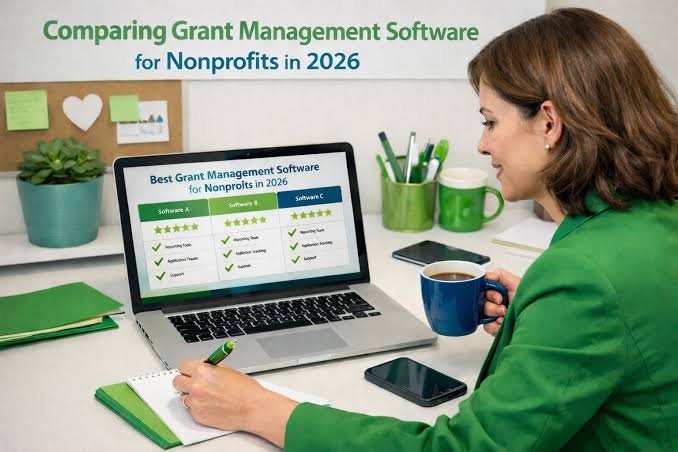
For most nonprofits, grant funding is not optional — it is the backbone of the operating budget. Yet the process of finding, applying for, tracking, and reporting on grants is often held together with spreadsheets, email threads, and shared folders that quickly fall apart as an organization grows. Grant management software exists to fix that problem. This guide explains what grant management software actually does, why more nonprofits are adopting it, which platforms lead the market in 2026, and how to choose the right one for your organization’s size and budget.
What Is Grant Management Software?
Grant management software is a centralized digital platform that helps nonprofit organizations organize and oversee every stage of the grant lifecycle, from identifying funding opportunities to submitting reports after a grant closes. Instead of tracking deadlines in a spreadsheet and proposal drafts in scattered documents, a grant management system brings funder records, application status, budgets, tasks, and compliance documentation into one place that the whole team can see and update.
Because grant funding comes from federal agencies, state and local governments, private foundations, and corporate funders, each with different rules, deadlines, and reporting formats, this centralization matters more than it might first appear. A missed reporting deadline or an incomplete compliance document can jeopardize not just the current grant, but future funding from the same source.
Why Nonprofits Are Investing in Grant Management Software Now
The funding landscape has grown more volatile in recent years, and that volatility is pushing nonprofits toward more disciplined systems. Shifts in federal funding have forced many organizations to diversify into private and corporate grants, submit a higher volume of applications, and stretch smaller teams further than before. Under those conditions, a missed deadline or a disorganized reporting cycle carries a much higher cost than it once did.
A well-run grant program also has to satisfy multiple, overlapping compliance frameworks at once, since every funder has its own documentation and audit requirements. Software that tracks these obligations in a single organized system meaningfully reduces the risk of missing something a funder expects to see.
Core Features to Look For
Grant management platforms vary widely in scope, but most nonprofits should evaluate a potential system against the following core capabilities.
Grant Prospecting and Discovery
Stronger platforms help teams identify good-fit funding opportunities by matching an organization’s mission, geography, and program area against a searchable database of grants, rather than requiring staff to manually comb through funder websites.
Deadline and Task Tracking
A shared calendar view with automated deadline reminders — commonly staged at intervals such as 60, 30, 14, and 7 days out — keeps applications and reports from slipping through the cracks, especially when a team is managing more than a handful of active grants at once.
Proposal and Document Collaboration
Built-in collaboration tools let multiple staff members draft, review, and edit proposals in one place, avoiding the version-control chaos of emailing Word documents back and forth.
Budget and Compliance Tracking
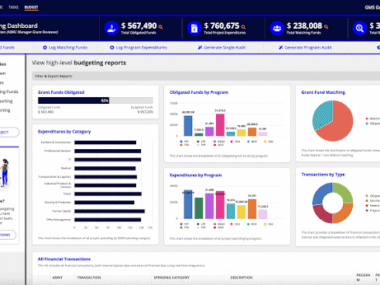
The system should tie each grant to its budget, spending restrictions, and reporting obligations, so finance and program staff are always working from the same numbers.
Reporting and Outcomes Data
Because funders increasingly expect outcomes data tied to real program results, the strongest platforms connect grant reporting directly to program or case-management data instead of requiring staff to re-enter the same figures in multiple systems.
Integrations
Look for compatibility with the donor management, accounting, and program databases your organization already uses, since a grant system that operates in isolation creates the same fragmented-data problem it is meant to solve.
Leading Grant Management Platforms in 2026
The market includes everything from lightweight trackers built for two-person development teams to enterprise systems designed for large foundations processing thousands of applications. Below is an overview of where the major platforms tend to fit.
Instrumentl
Instrumentl is built as an end-to-end platform combining grant prospecting, tracking, team collaboration, and reporting, aimed at organizations that want a single system rather than several disconnected tools.
Foundant Technologies
Foundant offers grant lifecycle management (GLM) software used by both grantmakers and grantseekers, with a strong focus on configurable application and review workflows for mid-sized organizations.
Fluxx
Fluxx targets larger foundations and government agencies with automation spanning the full lifecycle, from application intake through disbursement and reporting, along with a heavier emphasis on data security and configurability.
Blackbaud Grantmaking
Blackbaud’s platform functions as a combined CRM and grant management system, tying application data directly into donor and constituent records, which suits organizations already using other Blackbaud nonprofit products.
SmartSimple
SmartSimple is a highly configurable, enterprise-grade platform generally associated with large foundations. Its pricing and complexity tend to place it out of reach for small nonprofit teams.
eCivis
eCivis focuses heavily on compliance monitoring, post-award reporting, and grant discovery, and is frequently used by government agencies and larger nonprofits managing complex, multi-source funding portfolios.
LiveImpact
LiveImpact integrates grant tracking with broader program and donor management, making it a strong option for organizations that want grant data connected to the same system that tracks program outcomes and donor relationships.
A Note on GrantHub’s Discontinuation
GrantHub, one of the most widely used standalone grant tracking tools for small nonprofit teams, is being discontinued in 2026. Organizations still using it need to select a replacement platform and migrate their historical grant data before the service shuts down. Rather than treating this as a forced lateral move, many nonprofits are using the transition as an opportunity to upgrade to a platform with stronger discovery, reporting, or program-integration features than their old tracker offered.
Free and Low-Cost Options
Very small organizations managing only a handful of active grants can often get by with a well-organized spreadsheet, a shared calendar, and a simple document-storage system. Some nonprofit technology marketplaces also offer discounted or donated access to broader nonprofit software suites that include lightweight grant tracking features alongside donor management tools.
Government-run portals such as Grants.gov in the United States are free to use and are actually required for accessing most federal funding, but they are primarily research and application tools rather than full internal management systems, and most reviewers note they are not especially easy to navigate. For nonprofits serious about scaling their grants program, free tools are usually a starting point rather than a long-term solution.
When Does a Nonprofit Need Dedicated Software?
There is no single revenue threshold that triggers the need for grant management software, but a useful rule of thumb has emerged among nonprofit technology consultants: once an organization is managing more than five to ten active grants at a time, each with its own funder requirements and reporting schedule, dedicated software typically saves more staff time than it costs. Below that threshold, a disciplined spreadsheet system, updated consistently by one accountable staff member, can still work.
The real trigger point is risk rather than volume. If your team is regularly scrambling to find a report deadline, duplicating work across versions of the same document, or discovering a compliance requirement too late to fully meet it, that is a clear signal that manual tracking has become a liability rather than a cost-saver.
How to Choose the Right Platform for Your Organization
Step 1: Map Your Current Grant Volume and Pain Points
Before evaluating vendors, list every active grant your organization currently manages, along with where your current process breaks down — missed deadlines, disorganized documents, duplicated data entry, or reporting delays. This becomes your evaluation checklist.
Step 2: Separate Must-Have Features From Nice-to-Have Features
A two-person development team chasing corporate and foundation grants needs strong discovery and collaboration tools. A larger nonprofit running federal contracts needs deep compliance tracking and budget controls. Very few platforms excel at everything, so rank your priorities before you start demos.
Step 3: Calculate Total Cost of Ownership
Sticker price is only part of the cost. Factor in implementation time, staff training, and the ongoing hours required to keep the system updated. A cheaper tool that nobody maintains consistently can end up costing more in missed opportunities than a pricier platform your team actually uses.
Step 4: Confirm Integration With Existing Systems
Ask vendors directly whether their platform integrates with your accounting software, your donor database, and your program or case-management system. A grant tracker that cannot share data with the rest of your organization recreates the same silos it is supposed to eliminate.
Step 5: Run a Trial Before Committing
Most platforms offer a free trial or a live demo built around your organization’s own data. Use that period to test the actual workflow your team will use every week, not just the sales presentation.
Best Practices for Getting the Most Out of Grant Management Software
- Assign one staff member as the system’s owner, responsible for keeping records current
- Build your funder and deadline database before your next grant cycle, not during it
- Set automated reminders at multiple intervals ahead of every deadline, not just the final week
- Standardize how staff log notes, budgets, and outcomes so the data stays usable for future reporting
- Revisit your platform choice annually as your grant volume and organizational needs grow
- Train new staff on the system as part of onboarding, not as an afterthought
Frequently Asked Questions
Is grant management software worth it for a small nonprofit?
It depends on grant volume. Organizations managing fewer than five active grants can often manage well with a disciplined spreadsheet. Once that number grows, or once missed deadlines and compliance gaps start becoming a real risk, dedicated software typically pays for itself in saved staff time.
What is the difference between grant management software and grant writing software?
Grant management software focuses on tracking, deadlines, compliance, and reporting across the full grant lifecycle. Grant writing tools focus specifically on drafting and improving proposal content. Some platforms now combine both functions, while others specialize in one or the other.
Can grant management software help find new funding opportunities?
Many platforms include a prospecting or discovery feature that matches an organization’s mission and program area against a database of active grants, which can significantly cut down the manual research time required to build a funding pipeline.
How much does grant management software cost?
Pricing varies widely. Lightweight trackers aimed at small teams often start in the low hundreds of dollars per month, while enterprise platforms built for large foundations can run into five or six figures annually once implementation and training are included.
What should nonprofits using GrantHub do now that it is being discontinued?
Organizations should begin evaluating replacement platforms and exporting their historical grant data as soon as possible, rather than waiting until the shutdown date approaches. Several current platforms are positioned as direct alternatives, so this is a reasonable moment to also assess features you may have been missing.
Final Thoughts
Grant management software will not write a winning proposal for you, but it removes the administrative friction that causes good organizations to lose good funding: missed deadlines, scattered documents, and reporting gaps that damage funder relationships. The right platform depends entirely on your organization’s size, grant volume, and existing systems, so the best next step is not picking the most popular name on the market, but mapping your own workflow, testing two or three platforms against it, and choosing the one your team will actually use every week.


 freeman4u16