freeman4u16
Pursuing a PhD is one of the most rewarding — and most expensive — academic journeys a student can take on. For many African students with the talent and ambition to earn a doctorate, cost is the single biggest barrier standing between them and a research career. The good news is that dozens of fully funded PhD scholarships exist specifically to open that door, covering tuition, living expenses, health insurance, and even flights home. This guide walks through the best PhD scholarship opportunities available to African students right now, how to find the right one for your field, and how to build an application that actually gets noticed.
Why PhD Scholarships Matter for African Students
Doctoral study is a multi-year commitment, often three to six years, during which a student is expected to research, publish, and often teach, all without a full-time income. Self-funding a PhD abroad is simply out of reach for the vast majority of applicants, which is why scholarship funding is not a bonus but a prerequisite for most African students hoping to study overseas or even within Africa itself.
Fully funded PhD scholarships typically cover:
- Full tuition fees at the host university
- A monthly stipend for living costs (rent, food, transport)
- Health insurance for the duration of the program
- Return flights at the start and end of the scholarship
- In some cases, research and conference travel grants
Because competition for these awards is intense, it helps to understand exactly which programs exist, what they look for, and when they open.
Top PhD Scholarships for African Students
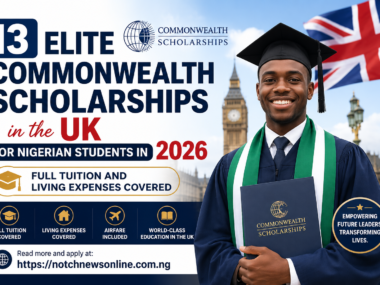
1. Commonwealth PhD Scholarships (UK)
Funded by the UK government and administered by the Commonwealth Scholarship Commission, this scheme is aimed squarely at students from least-developed countries and other qualifying Commonwealth nations across Africa. It funds full-time doctoral study at UK universities and covers tuition, a living allowance, airfare, and other allowances. Applications typically open in the second half of the year, so it’s worth checking the Commonwealth Scholarship Commission’s website early to align your research proposal and referee letters with the deadline.
2. DAAD Scholarships (Germany)
The German Academic Exchange Service (DAAD) runs several tracks relevant to African doctoral students, including general doctoral funding, the Leadership for Africa program, and the DAAD-NRF In-Country/In-Region Scholarship Programme, which funds Master’s and PhD study within Sub-Saharan Africa itself rather than requiring students to relocate abroad. DAAD scholarships generally include a monthly stipend, health insurance, and in many cases a travel allowance, and they are especially strong for students in engineering, natural sciences, and development-related fields.
3. Mastercard Foundation Scholars Program
This is one of the largest scholarship initiatives for African students globally, partnering with universities across Africa, North America, and beyond. Beyond tuition and stipends, the program is known for its strong mentorship, leadership development, and “give-back” ethos, expecting scholars to return and contribute to their communities. Partner institutions and available doctoral slots change from year to year, so checking the current list of partner universities is an essential first step.
4. Rhodes Scholarships (University of Oxford)
The Rhodes Scholarship remains one of the most prestigious postgraduate awards in the world, funding full-time study at Oxford, including doctoral programs. Several African constituencies have dedicated Rhodes Scholarships, including awards for West African nations and other regional and national constituencies across the continent. The scholarship is fully funded and merit-based, with a strong emphasis on leadership potential alongside academic excellence.
5. Chinese Government Scholarship (CSC)
China has steadily grown into a major destination for African postgraduate students. The Chinese Government Scholarship, along with schemes like the ANSO Scholarship for young talents, funds PhD study at Chinese universities and typically covers tuition, accommodation, basic health insurance, and a monthly stipend. These scholarships are especially competitive in engineering, agriculture, and applied sciences.
6. Australian Research Training Program (RTP) and University-Specific Awards
Australian universities, including Flinders University, the University of Melbourne, and others, regularly advertise fully funded PhD positions for international students, including African applicants, through the Research Training Program and individual faculty scholarships. These awards often come with a generous stipend and are tied to a specific research project, so applicants usually need to identify and contact a potential supervisor before applying.
7. Swiss Government Excellence Scholarships
Aimed at doctoral and postdoctoral researchers, this scholarship funds study at Swiss universities and covers a monthly stipend, tuition exemption, health insurance, and travel costs. It’s a strong option for students in the sciences, social sciences, and humanities looking for a well-resourced European research environment.
8. Fulbright Foreign Student Program
Fulbright remains a flagship route into US doctoral study for African students, covering tuition, a living stipend, accommodation support, airfare, and health insurance. Application timelines vary by country, so African applicants should check with the Fulbright Commission or US Embassy education office in their home country for exact deadlines, which often open early in the year.
9. AIMS-DAAD and Africa-Based PhD Scholarships
Not every strong PhD scholarship requires leaving the continent. Programs like the AIMS-DAAD PhD scholarships and various DAAD In-Country/In-Region awards fund doctoral research at African universities and research centres, which can be a great fit for students who want to build local research capacity, stay closer to home, or focus on Africa-specific research questions.
10. University-Specific and Field-Specific Awards
Beyond the major national and multilateral schemes, many individual universities run their own fully funded PhD scholarships for African students. Examples include the Vice Chancellor’s Africa Scholarship at the University of Dundee, the Ibrahim Scholarship Program covering institutions such as London Business School, SOAS, and the University of Birmingham, and African-focused graduate scholarships at UCL, the University of Edinburgh, and King’s College London. It’s worth checking the international office or graduate school website of any university you’re targeting, since many run scholarships that never appear on general scholarship listing sites.
How to Find PhD Scholarships That Fit Your Field
With so many opportunities, the challenge shifts from “finding a scholarship” to “finding the right one.” A few practical steps make this process far more manageable:
- Start with your field, not the country. Search for “PhD scholarship + [your subject]” before searching by destination, since funding availability varies enormously by discipline.
- Identify a potential supervisor first, especially for UK, Australian, and European programs, where many scholarships are tied to a specific project or research group.
- Set up alerts on reputable scholarship databases such as ScholarshipTab, Scholars4Dev, and Afterschool Africa, and check university graduate school pages directly.
- Track deadlines in a simple spreadsheet, since many major scholarships open just once a year and close within a few weeks.
- Don’t rule out home-grown funding. National research councils, in-country DAAD awards, and Africa-based fellowships are often less competitive than the flagship international schemes.
Building a Winning PhD Scholarship Application
Most PhD scholarship committees are looking for the same core things, even though the exact application format differs from program to program.
A strong, focused research proposal
Your proposal should clearly state the problem you want to investigate, why it matters, and how your proposed methodology will answer it. Avoid trying to cover too much ground: a tightly scoped, well-justified project is far more convincing than an ambitious but vague one.
Compelling letters of recommendation
Choose referees who know your academic work well and can speak specifically to your research potential, not just your grades. Give them plenty of notice and share your research proposal so their letters can reinforce it.
A clear personal statement
Explain not just what you want to study, but why now, why this particular program, and how the degree connects to your longer-term goals, whether that’s an academic career, policy work, or building research capacity back home.
Evidence of research readiness
Publications, conference presentations, a completed Master’s thesis, or even a strong research-based Master’s dissertation all help demonstrate that you’re ready for independent doctoral work.
Meticulous attention to eligibility and deadlines
Many strong applications are rejected simply for missing a document, an eligibility requirement, or a deadline. Read the guidelines twice, and start gathering documents (transcripts, passport copies, language test scores) well ahead of time.
Common Mistakes to Avoid
- Applying to a scholarship without first confirming you meet the nationality, age, or academic eligibility criteria.
- Submitting a generic research proposal that hasn’t been tailored to the specific supervisor or department.
- Leaving language proficiency tests (IELTS, TOEFL, or equivalent) until the last minute.
- Applying to only one scholarship. Most successful applicants apply to several programs in the same cycle.
- Ignoring smaller, university-specific, or in-country awards that carry less competition than the big-name scholarships.
Frequently Asked Questions
Do I need a Master’s degree before applying for a PhD scholarship?
In most cases, yes. The large majority of PhD scholarships, including Commonwealth, DAAD, and Fulbright awards, require applicants to already hold a Master’s degree or be in the final stages of completing one. A small number of integrated or 1+3 programs, mainly in the UK, allow strong Bachelor’s graduates to enter a funded Master’s year before progressing to the PhD, so it’s worth checking each program’s specific entry requirements rather than assuming a Master’s is always mandatory.
Can I apply for a PhD scholarship without contacting a supervisor first?
It depends on the country and funding model. In the UK, Australia, and much of Europe, PhD scholarships are often tied to a specific project and supervisor, so identifying and emailing a potential supervisor before applying is usually expected, and sometimes essential. In the US, by contrast, most PhD programs admit students into a department first and assign or confirm a supervisor after enrollment, so a formal pre-application contact is less critical, though still helpful.
How many scholarships should I apply to?
There’s no fixed number, but relying on a single application is risky given how competitive these awards are. A reasonable strategy is to identify four to six scholarships that genuinely match your field, career goals, and eligibility, and to give each application the depth and tailoring it deserves rather than spreading yourself across a dozen generic submissions.
Are PhD scholarships only for STEM fields?
No. While STEM disciplines often have more funding lines, particularly through DAAD, Chinese Government, and Australian RTP scholarships, strong opportunities also exist in the social sciences, humanities, law, and development studies. Commonwealth, Rhodes, and Fulbright scholarships in particular fund a broad range of disciplines, so students in non-STEM fields should not assume funded doctoral study is out of reach.
What’s the biggest reason strong applicants get rejected?
Timing and tailoring, more often than raw academic merit. Many well-qualified applicants miss early internal deadlines for recommendation letters or transcripts, or submit a research proposal that reads as generic rather than clearly connected to the specific department, supervisor, or funding priorities of the scheme. Starting the process six to twelve months ahead of the actual scholarship deadline gives enough room to avoid both problems.
Final Thoughts
Funding a PhD is a real challenge, but it is far from impossible. Between government-backed schemes like Commonwealth, DAAD, Chinese Government, and Fulbright scholarships, prestigious awards like Rhodes, and a growing number of university-specific and in-country opportunities, African students today have more genuine pathways into fully funded doctoral study than ever before. The key is to start early, cast a wide net, and tailor each application to the specific program and supervisor rather than sending out one generic proposal. With the right preparation, a scholarship-funded PhD is a realistic goal, not just an aspiration.
Are you currently applying for a PhD scholarship, or considering one? Share your field of study and target country in the comments, and I’ll try to point you toward relevant opportunities.


 freeman4u16